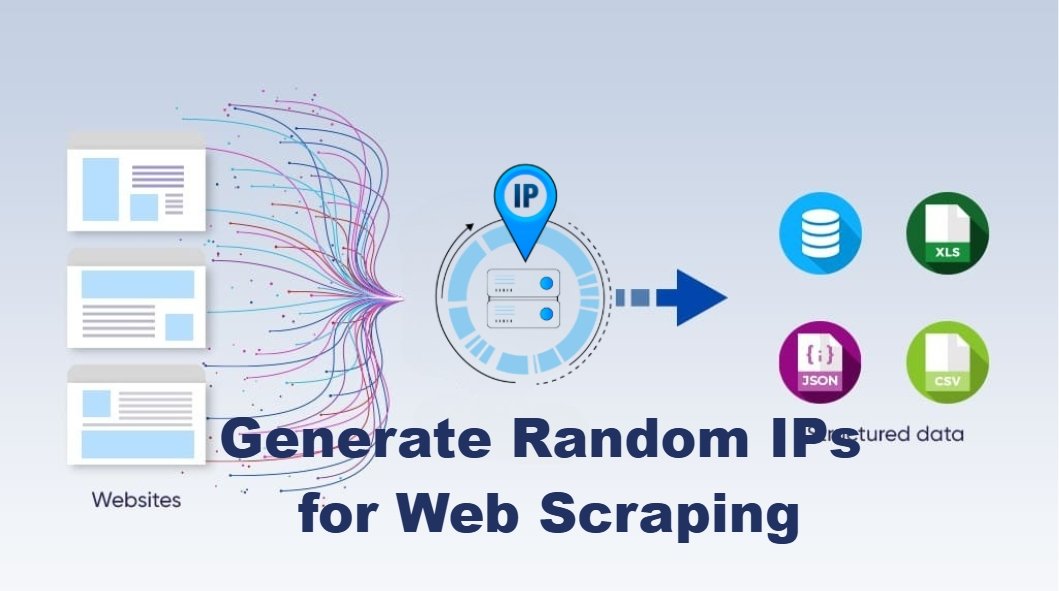
In the ever-evolving digital landscape, where cyber threats loom large and data privacy is paramount, one often-overlooked tool is quietly empowering security professionals and privacy advocates alike: the strategic use of random IP addresses. Far from a mere technical curiosity, Utilizing Random IPs for Cybersecurity and Privacy has emerged as a cornerstone practice, fundamentally changing how we approach network testing, simulate realistic attack scenarios, and even conduct internet-wide research while safeguarding sensitive information. It's about creating controlled chaos to reveal order, simulating the unpredictable to build the unbreachable.
At a Glance: Key Takeaways on Random IP Usage
- Crucial for Testing: Random IPs are vital for simulating diverse network traffic, load testing, and identifying firewall vulnerabilities.
- Privacy & Anonymization: They enable ethical data anonymization and privacy-preserving research in controlled environments.
- Nmap's Power: Tools like Nmap leverage random IPs (
-iR) for internet-wide research and testing firewall evasion. - Ethical Imperative: Responsible use demands strict adherence to legal frameworks, obtaining permission, and operating in isolated environments.
- Evolving Landscape: Modern generators offer advanced customization and integration, adapting to IPv6 and future AI demands.
- Risk Mitigation: Isolated sandboxes, diligent tracking, and ethical validation are essential for safe implementation.
The Unseen Architects of Digital Defense: Understanding Random IPs
At its heart, a random IP address is a simulated network identifier that, while appearing legitimate, isn't necessarily assigned to a real, active device. These addresses are either truly random, derived from unpredictable physical phenomena, or pseudorandom, generated by complex mathematical formulas. For most cybersecurity and testing applications, pseudorandom generation is more than sufficient, offering a high degree of unpredictability without the overhead of true randomness.
The choice between IPv4 and IPv6 significantly impacts the generation process. IPv4, with its 32-bit address space, offers a finite (though large) number of possibilities. IPv6, on the other hand, boasts a 128-bit address space, making it astronomically larger. This vastness requires different algorithms and drastically reduces the likelihood of duplicates, presenting both new challenges and opportunities for address generation.
Why Random IPs Are Indispensable: Core Applications in Cybersecurity & Network Testing
The strategic deployment of random IP addresses is a game-changer across several critical domains, providing insights that traditional, static testing methods simply can't match.
Sharpening Your Network Defenses with Realistic Simulations
Random IPs are the unsung heroes of network testing. Imagine needing to test how your web application handles traffic from 50 different geographical locations simultaneously for geo-targeting analysis, or how your firewall reacts to connection attempts from seemingly disparate sources. Random IP generation makes this possible, simulating diverse user traffic and exposing firewall vulnerabilities that might otherwise remain hidden. This capability is paramount for identifying weaknesses before malicious actors do. Exploring firewall vulnerability assessment strategies often reveals the necessity of such varied attack vectors.
Pushing Infrastructure to the Brink: Network Stress Testing
To truly understand the breaking point of your infrastructure, you need to push it beyond its limits. Random IPs facilitate robust network stress testing techniques, allowing administrators to simulate high-volume, diverse traffic patterns that mimic real-world scenarios, including Distributed Denial-of-Service (DDoS) attacks. By generating thousands of virtual users or connection attempts from seemingly random sources, you can uncover bottlenecks, identify performance degradation, and fortify your systems against future assaults. This proactive approach is critical for maintaining uptime and service availability, especially for publicly facing services.
Proactive Hunting for Hidden Weaknesses: Penetration Testing
Ethical hackers rely heavily on random IPs during penetration testing. Simulating attacks from a wide array of geographically dispersed or unknown sources helps uncover hidden vulnerabilities that a targeted, known-IP attack might miss. This isn't about launching malicious attacks; it's about mirroring the unpredictable nature of genuine cyber threats within a controlled, authorized environment. By assessing how systems respond to these diverse 'attackers,' organizations can strengthen their security posture proactively. These methodologies are often integrated into broader ethical hacking guidelines for responsible security practices.
Unveiling Internet-Wide Trends: Research and Analysis
Beyond immediate security applications, random IPs are invaluable for large-scale internet research. Historically, researchers have used thousands of randomly generated IP addresses for tasks like rate-limit tests, analyzing internet path failures, or mapping global trends in open ports and services. This kind of broad scanning, when conducted ethically and with proper authorization, provides crucial insights into the overall health and vulnerability landscape of the internet.
Hands-On Learning: Education in Action
For aspiring network administrators and cybersecurity professionals, integrating random IP scenarios into educational curricula offers invaluable hands-on experience. Students can learn to configure firewalls, analyze network logs, and understand traffic patterns by simulating diverse external interactions, bridging the gap between theoretical knowledge and practical application.
Leveraging Random IPs with Nmap: A Practical Deep Dive
One of the most powerful and widely used tools for network discovery and security auditing, Nmap, includes a specific option (-iR) designed for scanning randomly generated IP addresses. This feature is a cornerstone for research, reconnaissance, and large-scale internet scanning.
Nmap's -iR Option: Syntax and Examples
The syntax for using Nmap's random IP generation is straightforward:nmap -iR <num> <other_options>
<num>: Specifies the number of random IP addresses Nmap should generate and scan.<other_options>: Any other Nmap flags or parameters you'd typically use (e.g.,-sSfor SYN scan,-pfor specific ports,-oNfor output).
Practical Examples:- Basic SYN Scan of 10 Random IPs:
nmap -sS -iR 10 - This command initiates a quick, stealthy scan against 10 arbitrary IPv4 addresses.
- Scanning 50 Random IPs for Open SSH Ports:
nmap -p 22 -iR 50 - Useful for identifying publicly exposed SSH services across a random sample of the internet.
- Scanning 100 Random IPs for Web Services and Saving Results:
nmap -p 80,443 -iR 100 -oN random_web_scan.txt - This will scan for common web ports and save the detailed output to a text file for later analysis.
Real-World Use Cases for Nmap -iR
- Internet-Wide Research: Analyze global trends in open ports, services, and security vulnerabilities across a vast, randomized sample. This helps researchers understand general security postures and common misconfigurations.
- Finding Open Services: Discover publicly accessible services – be it web servers, mail servers, or various IoT devices – that might be inadvertently exposed.
- Testing Firewall Evasion Techniques: By sending probes from a non-targeted, random source, you can assess how well firewalls and intrusion detection systems (IDS) respond to unexpected, generalized scans, and if they block based on source IP reputation.
- Bug Bounty & Ethical Hacking: While always requiring explicit permission, scanning random targets can occasionally lead to the discovery of vulnerable systems within an authorized scope, contributing to responsible disclosure.
Limitations and Challenges
While powerful, Nmap's -iR option isn't without its limitations:
- Inefficiency: The vast majority of IPv4 addresses are unused, unroutable, or belong to reserved ranges (like 192.168.x.x, 10.x.x.x). This means a high percentage of scanned IPs will simply be unresponsive, leading to wasted time and resources.
- Legal & Ethical Concerns: Unauthorized scanning can easily violate local laws, ISP terms of service, and organizational policies. It risks blacklisting your IP, triggering security alerts, or even facing legal repercussions.
- Security Alerts: Even passive scans can trigger intrusion detection systems (IDS) or intrusion prevention systems (IPS) on target networks, flagging your activity as suspicious.
- IPv6 Ineffectiveness: Due to the immense size of the IPv6 address space, random scanning is largely ineffective. The probability of hitting an active IPv6 address by chance is negligible.
Navigating the Ethical & Legal Landscape of Random IPs
The power of random IP generation comes with significant ethical and legal responsibilities. While incredibly useful, the potential for misuse is equally high, leading to concerns around impersonation and privacy violations.
Organizations and individuals must strike a delicate balance between leveraging this innovation for security and research and ensuring strict compliance with legal frameworks. Regulations like the GDPR (General Data Protection Regulation) highlight the importance of data anonymization and user consent, making it critical to differentiate between acceptable testing and problematic impersonation.
Key Ethical and Legal Considerations:
- Authorization is Paramount: Any activity involving scanning or interacting with systems using random IPs must be conducted with explicit, documented authorization from the owner of the target systems. Without it, you are stepping into legally dubious territory.
- Privacy by Design: When using random IPs for research that might involve real user data (e.g., analyzing traffic patterns), prioritize data anonymization best practices. Ensure that no personally identifiable information (PII) can be traced back to individuals.
- Controlled Environments: Ethical testing, whether for stress testing or penetration testing, should always occur within isolated, controlled environments (sandboxes) that replicate production networks, minimizing any risk to live systems or actual users.
- Transparency and Documentation: Maintain thorough documentation of your testing methodologies, the scope of your random IP usage, and the rationale behind it. This transparency is crucial for accountability and demonstrating ethical conduct.
- Avoiding Malicious Intent: The line between ethical security research and malicious activity can be thin. Random IPs should never be used for activities such as unauthorized data exfiltration, service disruption without consent, or any form of harassment.
Frameworks for responsible innovation consistently prioritize transparency, data minimization, and user privacy. Adhering to these principles not only ensures legal compliance but also builds trust and fosters a more secure digital ecosystem.
Implementing Random IPs Responsibly: Best Practices for Risk-Free Operation
To harness the power of random IPs without incurring undue risk, a structured and ethical approach is non-negotiable.
Building a Secure Sandbox: Isolated Testing Environments
Never test random IP scenarios directly on live production systems. Always replicate your production network in an isolated "sandbox" environment. This sandbox should be air-gapped or strictly segmented from your operational networks, ensuring that any unintended consequences of your random IP testing remain contained. This prevents accidental targeting of live systems or disruption of critical services.
Tracking and Management: Knowing Your Usage
Implement robust tracking and documented workflows for all random IP generation and usage. This includes logging which IPs were generated, when, for what purpose, and for how long they were "active" in a test scenario. Good management practices help in forensic analysis if an issue arises and ensures accountability.
Recognizing Warning Signs: Staying Vigilant
Be hyper-vigilant for warning signs during testing. These might include:
- Unrealistic address patterns (e.g., too many IPs falling into specific, predictable ranges).
- Accidental targeting of live systems (an immediate halt and review are necessary).
- Unexpected network traffic spikes or alerts from your IDS/IPS within the testing environment that deviate from expected test behavior.
Such signs warrant immediate investigation and adjustment of your methodology.
Validating IP Sets: Ensuring Accuracy and Purpose
Before deploying a set of random IPs in a test, validate them to ensure they align with your specific testing requirements. For example, if you're testing geo-targeting, ensure the generated IPs accurately reflect the desired geographical distribution. Tools and random IP address generator platforms often provide features for filtering and validating generated IP ranges.
Maintaining Ethical Standards: Beyond Compliance
Beyond legal compliance, a strong ethical compass must guide all random IP activities. Prioritize user privacy, practice data minimization (only collect data absolutely necessary for the test), and under no circumstances engage in impersonation or malicious activities. The goal is to strengthen security, not to compromise it.
Best Practices for Responsible Nmap -iR Use:
When utilizing Nmap's -iR option, specific best practices further mitigate risks:
- Obtain Explicit Permission: For any broad or internet-wide scans, always seek explicit approval from relevant authorities (e.g., your organization's legal team, research ethics board, or target system owners if applicable).
- Respect Legal & Ethical Guidelines: Understand and adhere to network reconnaissance laws and avoid sensitive IP blocks (e.g., government, military, critical infrastructure) unless specifically authorized.
- Use Rate Limiting: Prevent aggressive scanning that could be mistaken for an attack. Nmap's
--max-rate <num>option can limit packets per second (e.g.,nmap -iR 100 --max-rate 500). - Filter Unroutable IPs: To improve efficiency and avoid unnecessary network noise, filter out reserved or private IP ranges (e.g., 192.168.x.x, 10.x.x.x, 172.16.x.x to 172.31.x.x) if your target is the public internet. This often requires pre-processing the random IP list or using advanced Nmap scripting.
- Log & Analyze Results Systematically: Store all scan results in an organized manner (e.g.,
-oNfor normal output,-oXfor XML) for future analysis and auditing. - Use VPNs or Proxies (Ethically): While a VPN or proxy can protect your identity during reconnaissance, be aware of the service provider's terms of service and legal implications. This should only be done within an authorized, ethical framework.
Beyond the Basics: Evolving Demands and Future Horizons
The landscape of random IP generation is far from static. As network architectures grow more complex and threats become more sophisticated, so too do the demands placed on these tools.
Modern random IP generators are moving beyond simple number sequences. They now offer highly customizable address ranges and subnet masks, allowing for more granular and targeted simulations. Integration with cloud platforms is becoming standard, enabling large-scale simulations involving thousands of virtual users and geographically diverse traffic, all managed and orchestrated with ease.
Looking ahead, the future of random IP generation will likely see advanced AI integration. Imagine AI algorithms dynamically generating IP addresses and traffic patterns that precisely mimic specific threat actor profiles or complex attack vectors, adapting in real-time to system responses.
The ongoing transition to IPv6 also presents new challenges and opportunities. Due to its vast address space, traditional random scanning methods are largely impractical. Future algorithms will need to focus on generating IPv6 addresses within more realistic and active subnets or employ entirely new strategies to make random IPv6 utilization feasible for testing and research.
Choosing the Right Tools: What to Look For in a Random IP Generator
Whether you're a seasoned cybersecurity professional or an educator building a lab environment, selecting the right random IP generator is crucial. These tools come in various forms:
- Standalone Applications: Desktop software offering robust features, often preferred for dedicated security teams.
- Web-Based Generators: Convenient for quick, on-demand generation, often with fewer advanced features.
- Programming Libraries: For developers who need to integrate random IP generation directly into scripts or custom tools (e.g., Python's
ipaddressmodule,randommodule).
When evaluating options, prioritize these key features: - Realistic Geographical Distribution: Can it generate IPs that appear to originate from specific regions or countries? This is vital for geo-targeting tests.
- Customization Options: Look for controls over address ranges, subnet masks, exclusion lists (e.g., private IP ranges), and the ability to specify IPv4 or IPv6.
- Generation Accuracy & Randomness Quality: Does the generator use truly random or robust pseudorandom algorithms? A proven track record and transparency about its methods are important.
- Ease of Use & Integration: Is the interface intuitive? Can it easily export lists of IPs for use with other tools like Nmap? Can it integrate with cloud environments or existing CI/CD pipelines?
Expert insights consistently emphasize opting for tools with a proven track record for generating high-quality, unpredictable random IPs. Ease of use and seamless integration with your existing security stack are also critical for operational efficiency. For a deeper dive into available solutions, exploring a dedicated random IP address generator resource can provide valuable context.
Common Questions & Misconceptions About Random IPs
Let's clear up some common doubts surrounding the use of random IP addresses.
Are random IPs truly anonymous?
No, not in the sense of protecting your identity when you initiate a scan or test. While the target IP address is random, your source IP address (the one you're scanning from) is still visible to the systems you interact with (unless you use a VPN or proxy, ethically). Random IPs are used to simulate diverse target origins, not to anonymize the source of the test.
Can I use random IPs for anything I want, like probing websites without permission?
Absolutely not. The ability to generate and scan random IPs does not grant you permission to interact with systems you don't own or have explicit authorization to test. Unauthorized scanning is illegal and unethical, potentially leading to severe legal consequences and network blacklisting.
Are pseudorandom IPs good enough, or do I need truly random ones?
For almost all cybersecurity testing and privacy applications, pseudorandom IPs are more than sufficient. They are computationally efficient, highly unpredictable for practical purposes, and easier to generate in large quantities. Truly random IPs, while theoretically superior, are far more complex and resource-intensive to produce, offering little practical advantage for most use cases.
Is using Nmap with -iR illegal?
Nmap itself is a legitimate network tool. Using -iR to scan random IPs is not inherently illegal. However, the act of scanning another person's or organization's network without permission can be illegal, regardless of whether the IPs were random or targeted. It depends entirely on your intent, authorization, and the laws of your jurisdiction. Always obtain explicit permission.
Empowering Your Digital Resilience: Next Steps
The strategic utilization of random IP addresses for cybersecurity and privacy is more than just a technical trick; it's a fundamental shift in how we approach network defense and data integrity. By embracing this approach, security professionals can build more resilient systems, researchers can uncover critical internet trends, and educators can equip the next generation with practical skills.
The key lies in responsible implementation. Start by understanding the ethical and legal frameworks that govern your activities. Invest in robust tools and isolated testing environments. Continuously educate yourself and your team on best practices. As our digital world continues to expand, the ability to simulate and test with unpredictable precision, while upholding privacy and ethical standards, will be an increasingly invaluable asset in securing our collective digital future.